Keith Allison’s decades of experience make him ‘top dog’ among retriever trainers
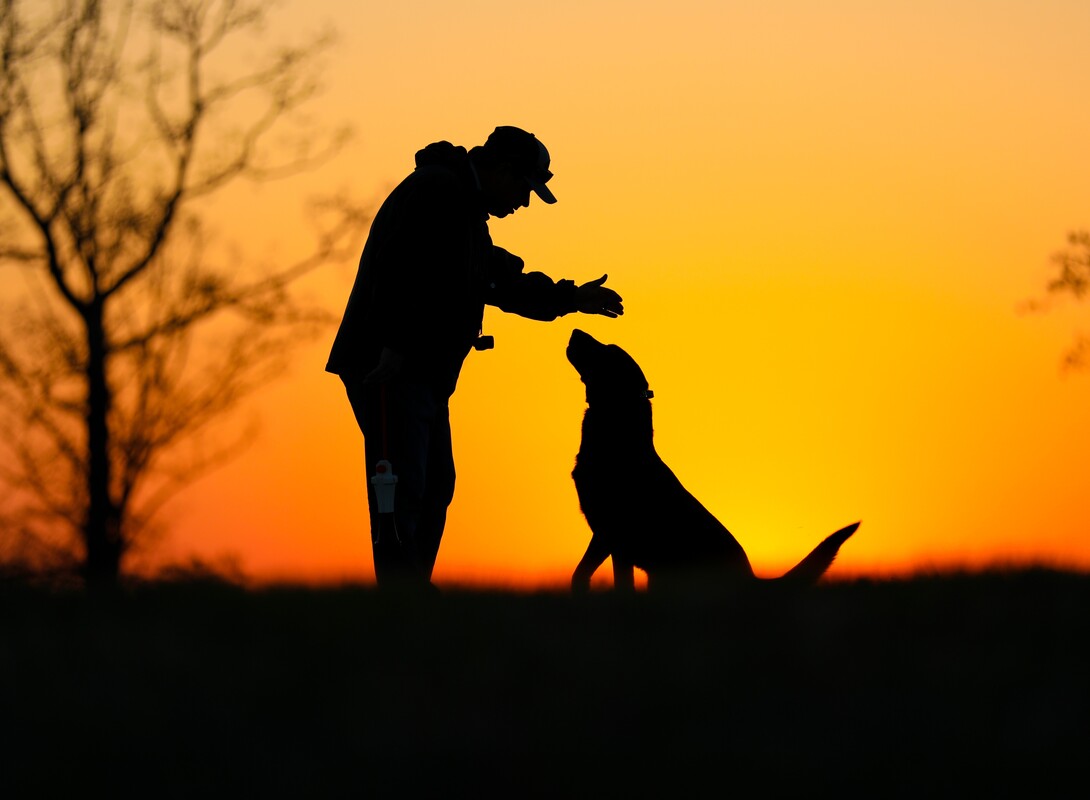
No two dogs are the same. Each one has its own personality, preferences, talents and traits. Keith Allison has learned this well over decades of successfully training retrievers. “A teacher has a classroom full of kids. The information is the same, but you may have to tweak how you give that information to every single kid. You can’t have a cookie-cutter approach,” Allison says. “You’ve got to figure out who you’re dealing with in this training process; if I know who I’m dealing with, I know how to deal with them.”
Allison’s approach has yielded some of the most successful hunting and competition dogs in the country. Many longtime hunters in Arkansas are familiar with dogs he’s trained: Lucas and Steel were featured on the 2010-11 and 2021-22 state duck stamps, respectively.
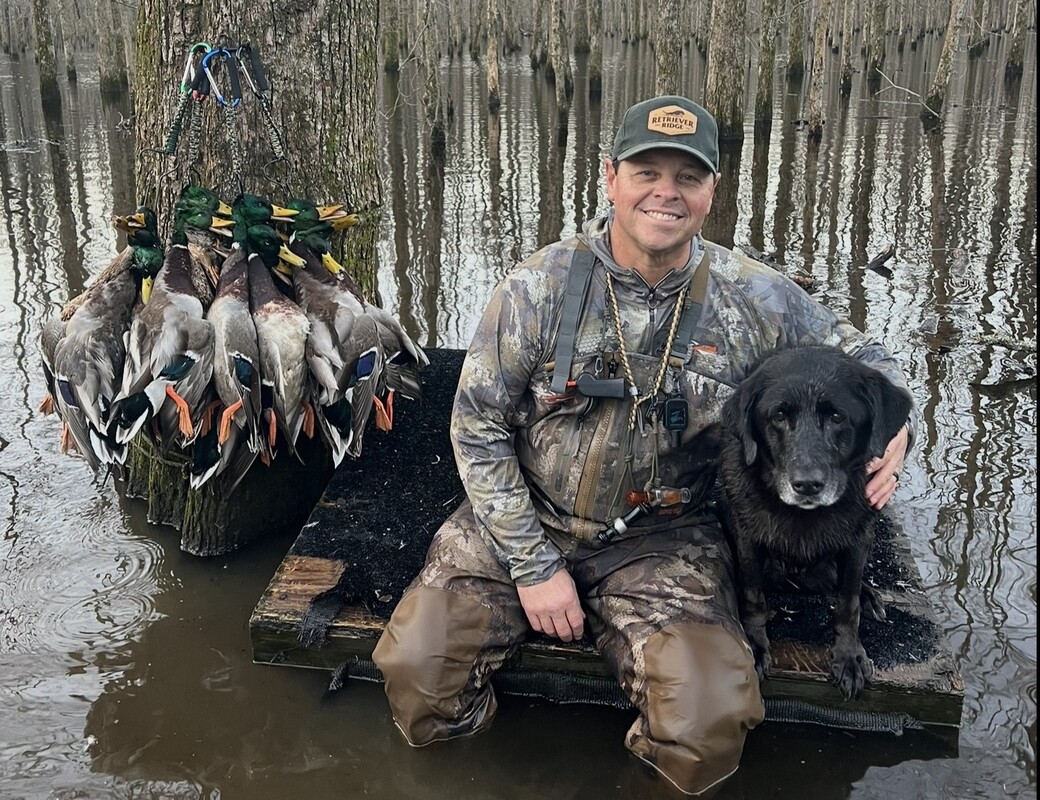
“He’s masterful, in my book, of training a hunting retriever and having him well-suited for the hunter,” says Bobby Martin, Lucas’ owner and Allison’s client-turned-friend. “He’s trained nine of my retrievers over time.”
The First Duck Dog
Allison grew up in McGehee, where rice fields and flooded timber were plentiful. His family hunted deer and quail instead of ducks, opting for breeds like pointers, setters and hounds to track and tree their targets.
“I grew up watching my dad work these bird dogs,” he says. “My family has a deep-rooted tradition of being around dogs, having hunting dogs. It started at a very, very early age for me, seeing that and being exposed to it.”
But his family did grow rice, and in Allison’s early 20s, he learned why duck hunting was so popular in eastern Arkansas when a friend proposed visiting his uncle’s field to try it out.
“We slipped back there on that rice field, and, I mean, an absolute wall of mallards got up off this field. We were right up there close; we snuck up on them along a tree line and that wall just gets up — I mean, hundreds and hundreds of them,” he says. “We shoot, and there was something about that moment that told me, ‘I’ve got to be a part of this.’”
Allison got his first duck dog, Cosmo, in the mid-1990s. Cosmo was a 95-pound chocolate Lab from Canada that Allison had the honor to train at a high level.
“Cosmo was really special,” he says. “I competed in the very first ESPN Super Retriever Series with him and he was the first chocolate male that ever made the finals of the Series. He was a big, beautiful dog.”
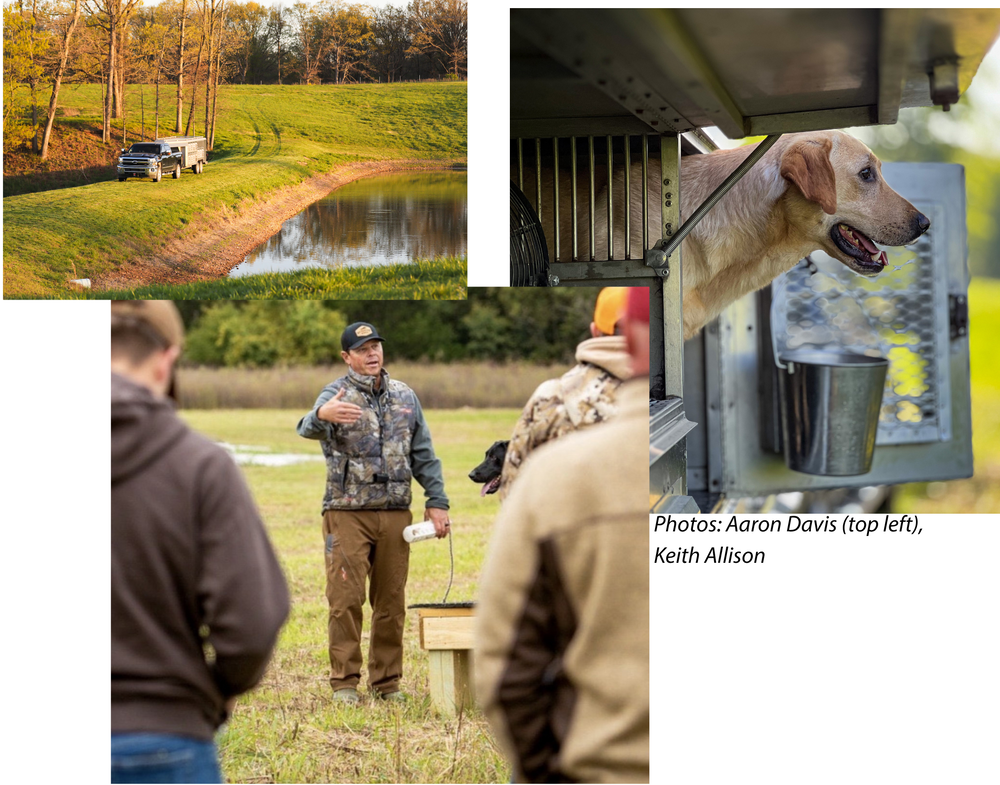
Dog training wasn’t Allison’s first career choice; he studied and worked in physical therapy, treating some of the country’s top professional and college athletes, like the Chicago Bulls’ Scottie Pippen. But when friends and colleagues observed Cosmo and other dogs Allison owned and trained out on hunts, they started asking if he could help get their dogs in the same shape.
“This was just a hobby of mine that turned into a profession over time,” he says. “I started out just taking a few, just because I enjoyed working with them, and I was really just helping out some friends more than anything. Long story short, that turned into me leaving physical therapy and going into the professional side of retriever training.”
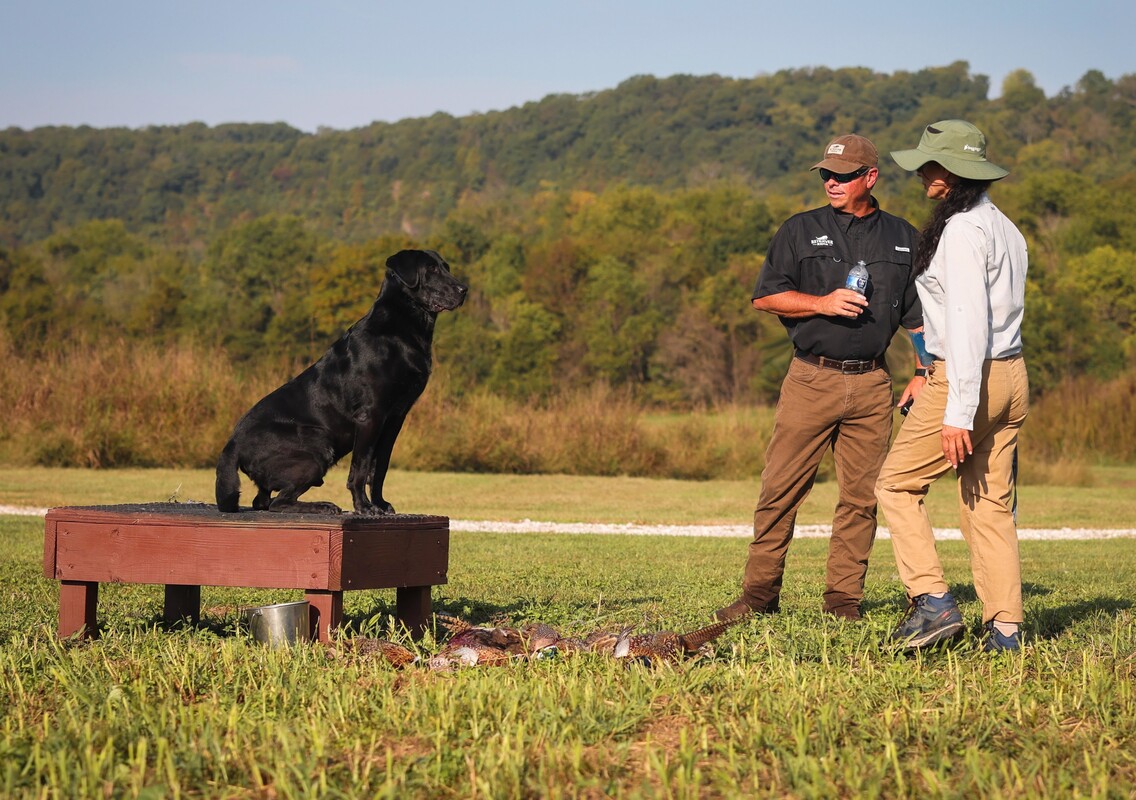
(Photo submitted by Keith Allison)
Retriever Ridge Kennels
Allison transitioned into a professional dog training career in 1999, and in 2018 he established Retriever Ridge Kennels in Pea Ridge. He’s trained dogs for hunters across the country, including Fortune 500 executives like Martin, former CEO of Walmart International, as well as well-known professional athletes and clients who have become close friends.
“His integrity, it’s impenetrable. He’s a very loyal friend, a very giving friend. There’s no price tag or expectation on your friendship. He’s going to give me more than he would ever try to take out of a friendship,” Martin says of Allison. “He’s a quality guy.”
Over the last three decades, Allison has developed a distinct philosophy about how to treat and train retrievers for hunting and competition. He’s identified three personality types in retrievers, which he takes into consideration when the training process begins.
“You have front of the pack, middle of the pack and back of the pack dogs. They come out of the womb like that. You can watch them — the front of the pack ones, they’re knocking everybody out of the way to get food. They’re rambunctious,” he says. “The middle of the pack, they want to keep everybody happy. They’re happy-go-lucky. The back of the pack dogs, sometimes they’re a bit softer, maybe a little shy — kind of wallflower types.”
Pedigree also plays a role in determining how a dog will perform on a hunt, Allison says.
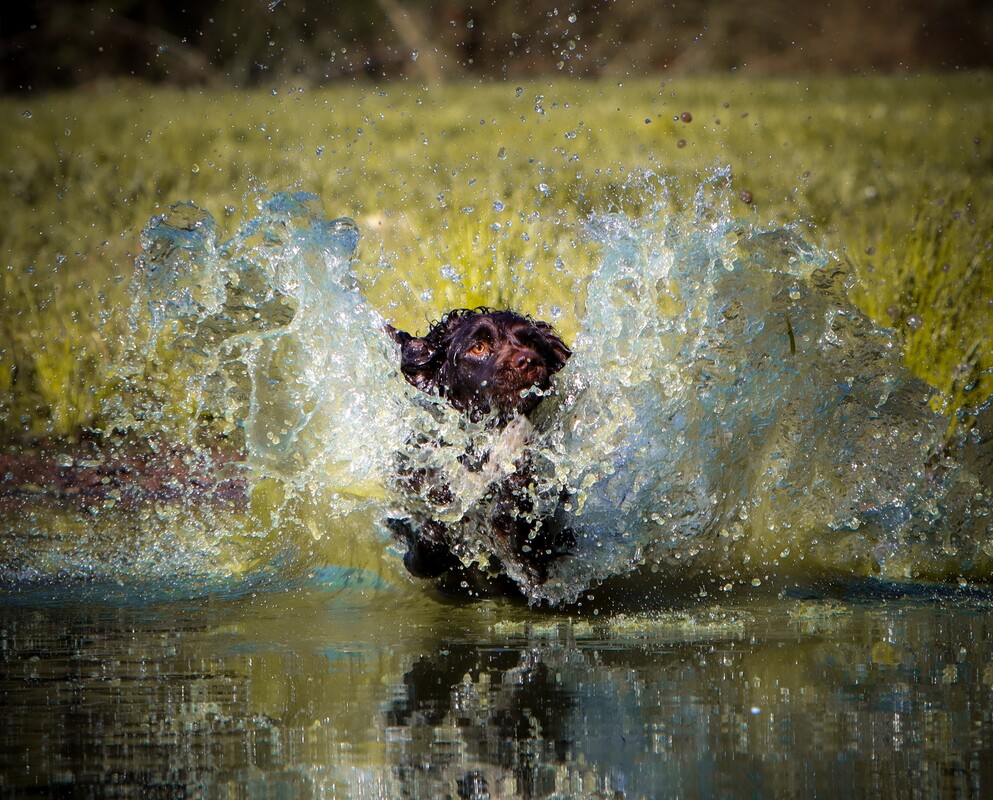
(Photo submitted by Keith Allison)
“An analogy I use is, you don’t buy a mule to run the Kentucky Derby,” he says. “You have to start with good genetics, and then you pick a puppy that’s going to fit your personality. If you’re someone who is really soft-spoken and easygoing, you don’t need the dominant, front of the pack dog. You get someone who is loud and overbearing and a little bit firm — they can’t have that back of the pack, soft dog.”
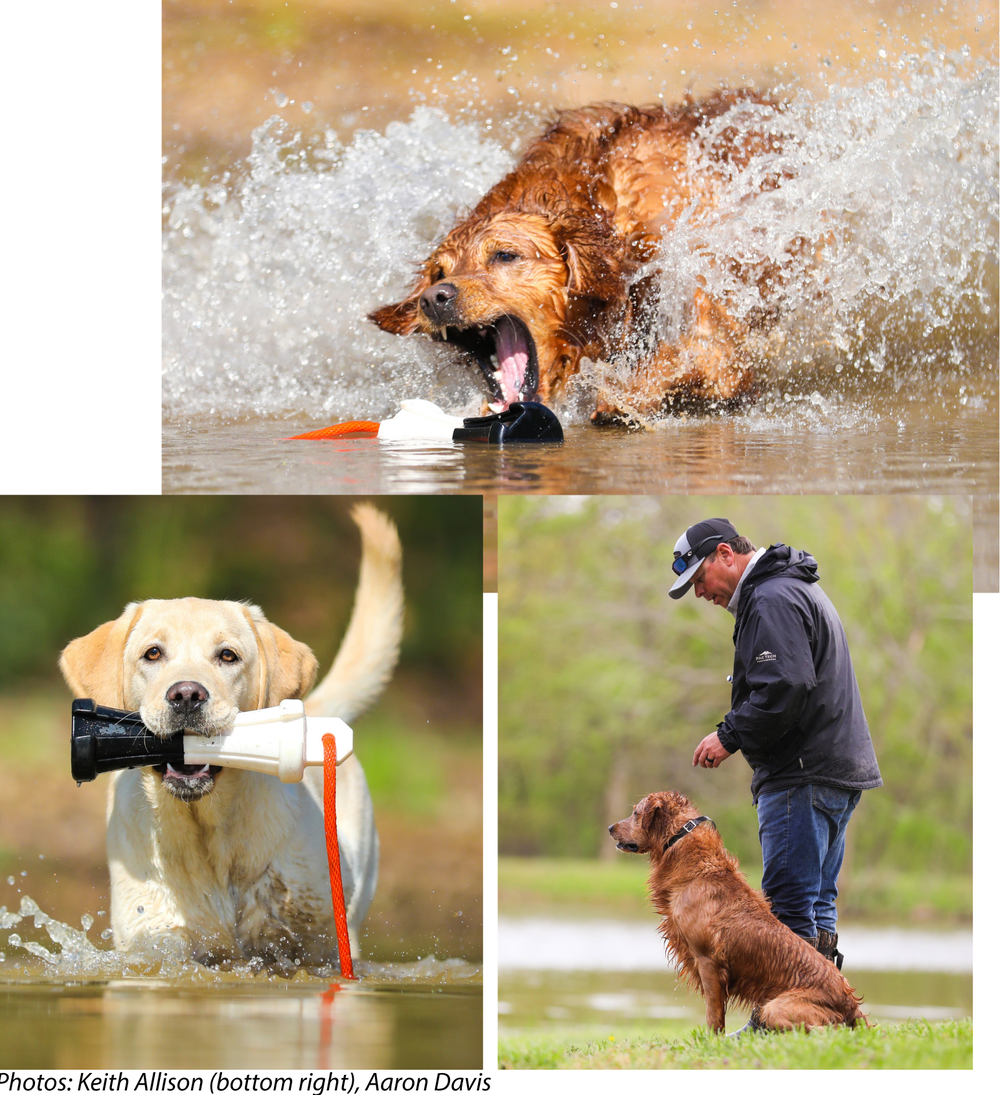
In a typical year, Allison will train 30-40 dogs, typically keeping 18-25 dogs at any given time. He says it’s been important to him to provide hands-on, personalized training.
“I do all of the actual dog training myself. That allows me to know every dog, every owner’s goals, and every stage of each dog’s development firsthand,” he says. “I’ve always preferred a model that lets me maintain a direct relationship with both the dogs and their owners.”
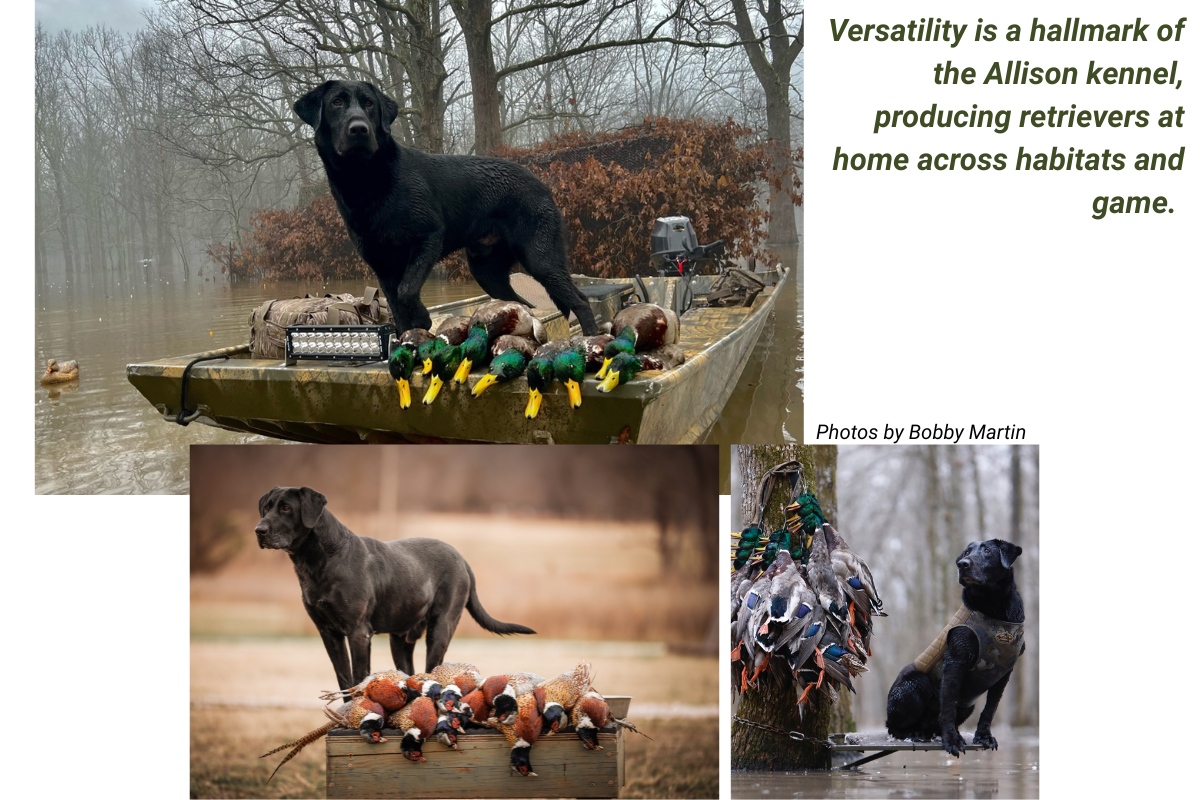
Allison has trained some very special dogs in his years. Cosmo sticks out, of course, but so do Lucas and Steel, as well as Abby, Deke, Doc, Hank, Goose, Gauge, Mac, Raven, Rey and Sage.
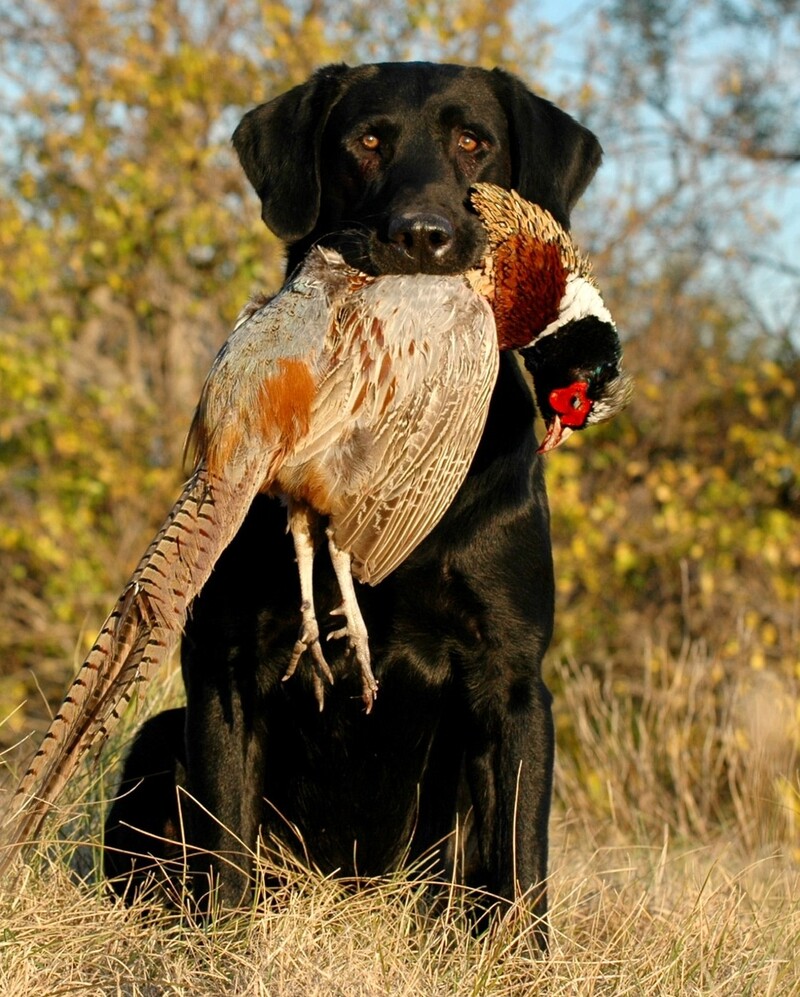
(Photo by Bobby Martin)
“When I think about special dogs, I think about special retrieves and sometimes just some of these competitive dogs that I had,” he says. “With Deke, we were hunting in the north woods at the Greenbriar Duck Club. … It still plays in my mind like a movie. It was the prettiest flooded timber scenario you could ever look at. The sun’s coming through the trees; they’re losing their leaves, but they’ve still got a little color. And the dog is just running, wide open, for at least 300 yards through the woods.
“Deke looked like a missile, and when he hit that duck in what was probably 8 to 10 inches of water, it just exploded, and you could see the sun through all those water droplets. There was something about that retrieve that just looked like a painting; there was something magical about that one.”
Dog training is really a calling for Allison, and it scratches the duck hunting itch year-round. Every retriever trained, for him, represents years of successful hunts with clean kills.
“Your dog is your biggest conservation tool,” he says. “We’re going to be the team that sets everybody up for success for eight, nine, 10 years of opening days.”