Baseball and duck hunting have shared a connection for more than a century. Some of the game’s biggest names found their way to the duck woods, including the legendary Babe Ruth, a passionate waterfowler during the offseason. Hall of Famer Ted Williams, Bo Jackson and countless others have traveled to Arkansas in pursuit of mallards. Closer to home, Arkansas natives Preacher Roe and New York Yankees great Bill Dickey spent part of their winters chasing ducks back home.
Duck season fits neatly into a baseball player’s schedule. With baseball in the spring and summer and duck hunting in the winter, days afield mesh perfectly with the offseason. The easy brotherhood of the duck blind mirrors life in the clubhouse, and the two pursuits share more common ground than most folks might expect.
Arkansas Razorbacks baseball has produced its share of duck-hunting ballplayers, including former big-league All-Star Kevin McReynolds and 2018 ace Blaine Knight — and full disclosure, this writer is a fellow Razorbacks alumnus with the same incurable affliction. Hall of Fame Coach Norm DeBriyn and future Hall of Famer Dave Van Horn partake in annual hunts in the Stuttgart area.
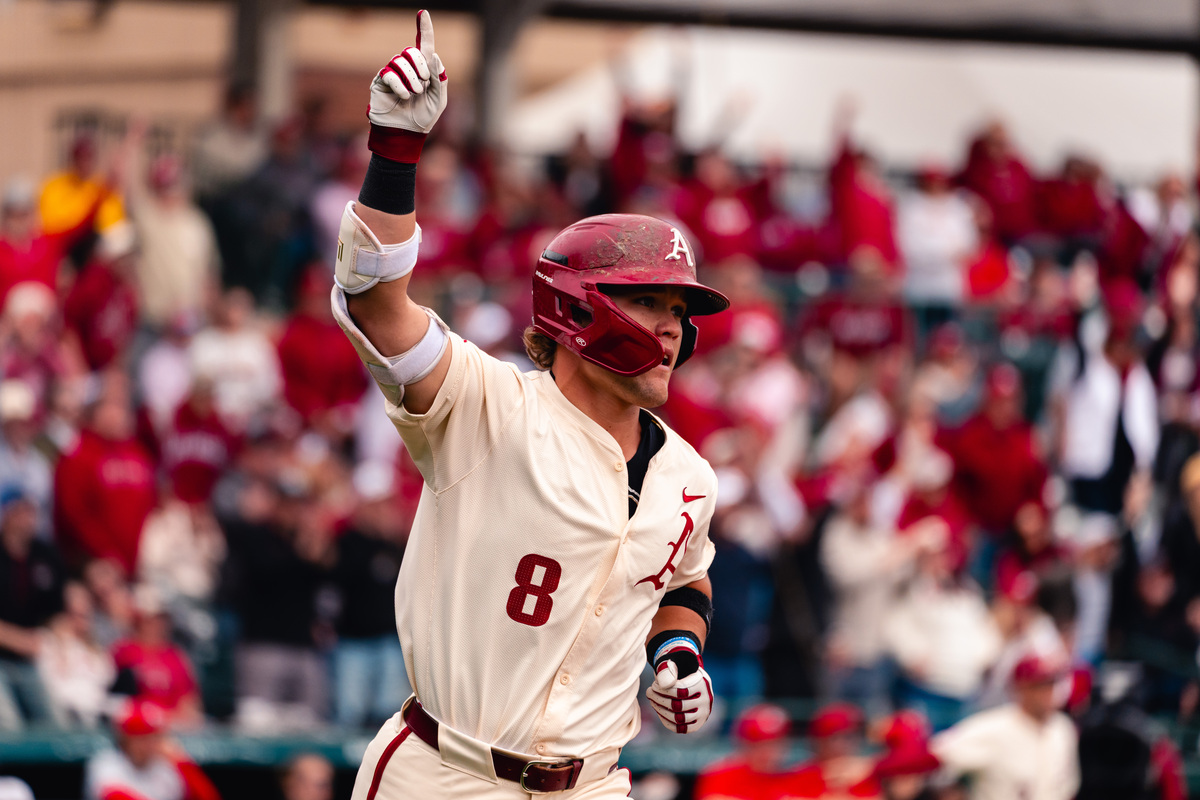
But none of the past duck-hunting Razorbacks have elicited duck calls from 10,000+ fans at Baum Walker Stadium like fan favorite Camden Kozeal. His walk-up song when he approaches the batter’s box is “Duck Blind” by The Bone Collector. Fans have even brought decoys to wave around as the crowd whips into a frenzy for each at-bat.
Kozeal hails from Omaha, Nebraska, and found his way to the University of Arkansas after playing his freshman year at SEC rival Vanderbilt. He immediately endeared himself to the Razorbacks fan base with his gritty style of play and his steady, consistent performance on the diamond. But a love for the outdoors seemed to elevate his popularity.
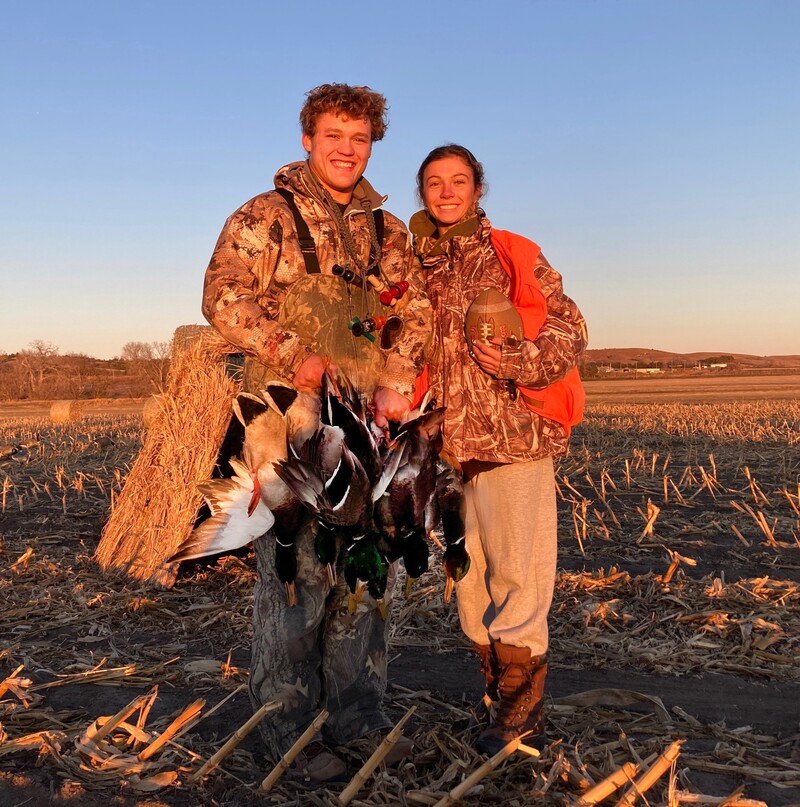
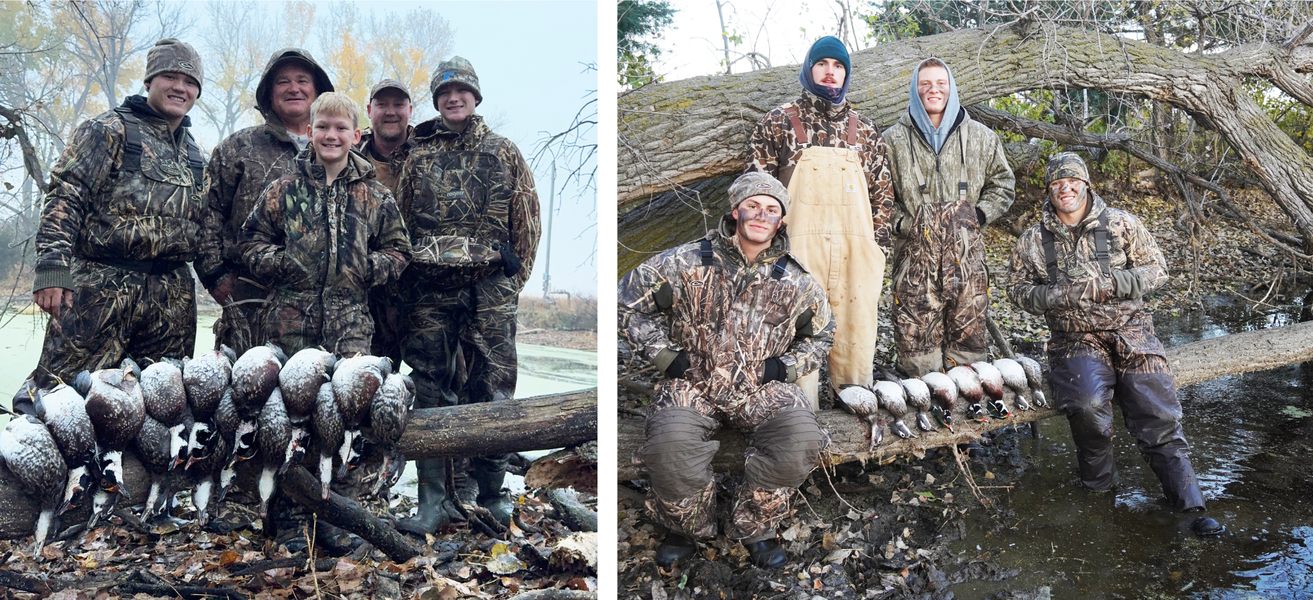
Camden came to Fayetteville with the duck hunting bug firmly in tow. His dad, Matt, uncle Mike and cousin Tyke are all passionate duck hunters back in Nebraska, and the foursome have spent many a morning in the blind. Per Kozeal, “We hunt central Nebraska in Custer and Garfield County. Lots of rivers — the Loup River system — cornfields, warm-water sloughs fed by springs that resist freezing even in hard winters, cut grass pastures, and little runoff ponds off of fields.”
Waterfowling in Nebraska is quite different from how ducks are pursued in Arkansas. The obvious difference is that there are no opportunities for mallards in flooded timber, but even decoy strategies differ.
“With it being Nebraska, there is a ton of visibility, so we can see birds following rivers nearby. Motion is key. Lots of water movement and mojo-type decoys. We use a lot of Canada goose decoys — probably 12 dozen — between full bodies, sleeper shells and silos. Ducks will decoy right into the goose spread,” Kozeal says.
Last season, Kozeal got his first taste of Arkansas duck hunting after receiving an invite from Harding University football coach Paul Simmons to Fowler’s Point along the White River north of Des Arc. The anticipation of hunting in the “Duck Hunting Capital of the World” wasn’t lost on Kozeal.
Of course, it helps to be hunting one of the finest clubs in the state, and the trip was everything he expected and more.
“I’ve always wanted to experience flooded timber duck hunting. The closest thing I’ve ever experienced to it is standing next to a tree in a Nebraska re-use pit, shooting wood ducks. I’ve watched so many duck hunting shows and heard stories about mallards through the trees. It’s definitely something you have to experience to fully appreciate it, and I’m glad I did,” says Kozeal.
Pressing up against an oak tree, trying to hide from inbound mallards, wasn’t the only thing Kozeal noted on his outing to Fowler’s Point. Camo patterns and the importance of the duck call also stood out.
“Back home, we all have wetland camo patterns, while everyone in Arkansas wears bottomland, so I looked like a goofball compared to everyone else,” he says. “Something I also noticed is how important it is to call in the trees. In Nebraska, I think they rely more on vision and a little motion than sound, though you can definitely call birds there, too. In the trees, it seemed like they were listening to find where their friends were. Water motion and sound are what they were looking for. I’d say calling is more important in the woods than on the plains.”
The All-American Kozeal was selected in the third round of the 2026 Major League Baseball draft by the Miami Marlins ending his playing days as a Razorback. But he does hope to return to The Natural State for more duck-hunting adventures.
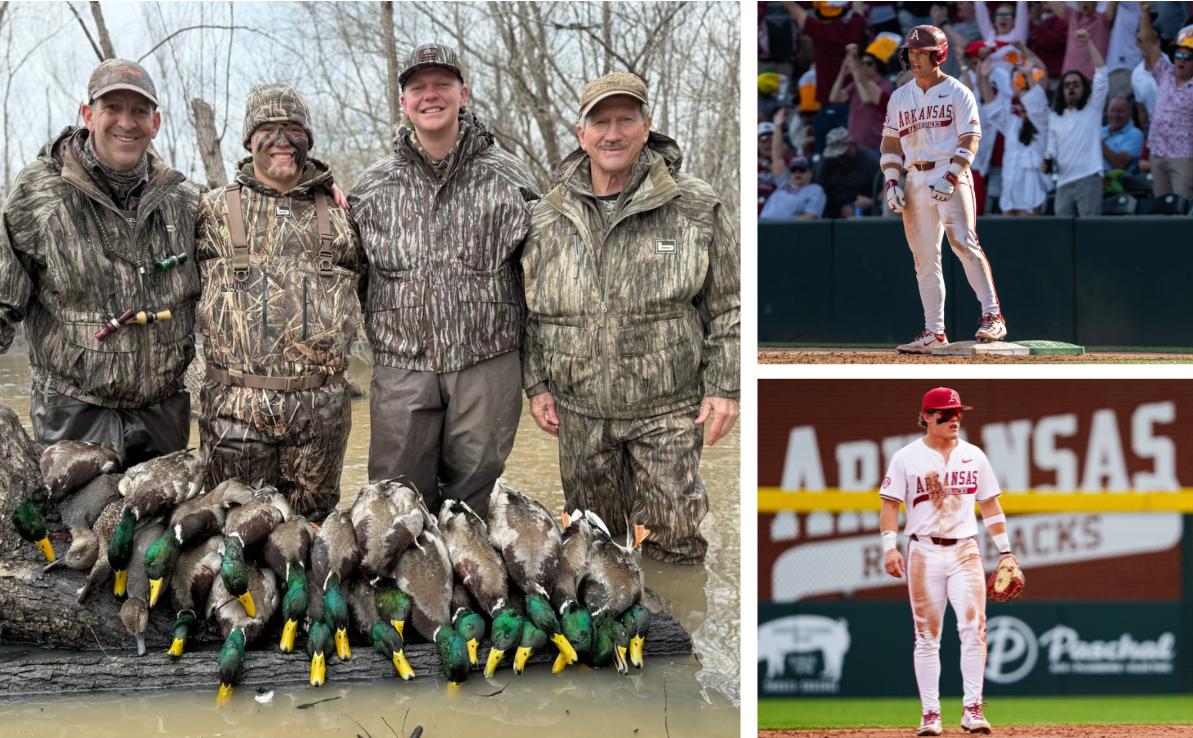
“Someday, I would like to either live in Arkansas or have access to some flooded timber. I would love to hunt Coca-Cola Woods or Five Oaks just because of their history and what they mean for the state and conservation,” he says.
Kozeal’s future will be paved with success, whether on the baseball diamond or in the duck woods, because he genuinely gets it. His take on the sport doesn’t sound like that of many of his peers, consumed with the pile and the social media posts.
“When it gets down to it, I love shooting limits of birds more than anyone, but it’s about spending time with friends and family in God’s creation,” Kozeal says. “It’s something for families to do and to be close to each other. That’s how it was and is in the Kozeal family in Nebraska. You’re not on a screen or busy or worried about anything. You’re together, telling stories and just connecting with one another. I love duck blind stories and all the laughs that come with it.”
The big leagues may drag him away from Arkansas, but it may be the mallards that will bring him back.