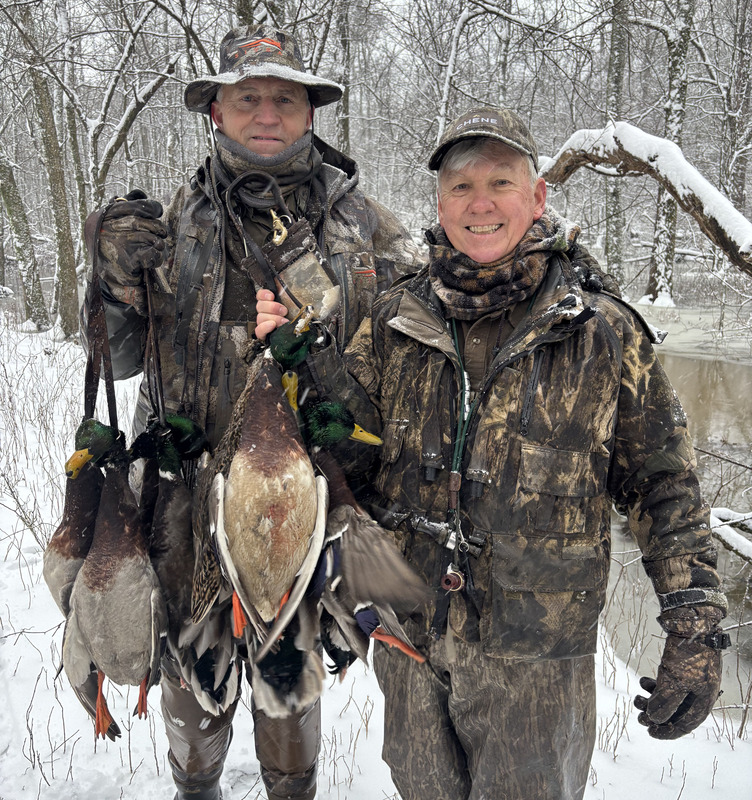
Chuck Smith has been part of Ducks Unlimited for decades, from selling raffle tickets for his local branch in Tennessee to serving as the national organization’s top volunteer as president from 2022-24. The decision to move the nonprofit’s headquarters to Memphis was made from his living room in the early 1990s, and earlier this year he completed a term as chairman of DU’s national board.
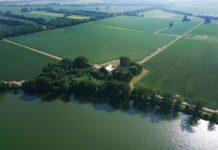
As owner of the legacy Circle T hunting property near Stuttgart, Smith placed 1,500 acres of prime waterfowl habitat in Arkansas under a DU conservation easement, perpetually protecting those wetlands from development and habitat destruction.
“It ensures that property will remain as it is today, which is totally focused on waterfowl habitat, regardless of who the owner is; any new owners will still be bound by the restrictions placed on the property, meaning they can’t clear cut the 600-acre greentree reservoir that’s the most beautiful duck hunting habitat I’ve ever seen,” Smith says.
Previously a corporate recreational property, when Circle T came available for sale in the early 1990s, Smith was urged to buy it by his friend, conservationist George Dunklin. Smith didn’t think he could afford it at the time and passed. The next year, Dunklin called again.
“He said, ‘This time it’s really for sale; they dropped a zero off the price tag,’” Smith recalls.
He made the purchase, and with Dunklin’s expertise, Smith familiarized himself with land management techniques that would optimize the property for waterfowl habitat, including preserving the GTR.
“We open the canopy to allow more sunlight to get more growth,” he says. “We’re trying to figure out a more efficient way to put water on in the fall, and once the ducks leave, get it off the trees quick, because if we lose those red oaks — pin oaks, willows, nuttalls — well, that’s all we’ve got.”
He also drained a long-standing but deteriorating pond, finding in its wake some of ducks’ favorite foods erupting from the moist soil bank. Smith is following the science of preservation, and hopes his property can serve as an example to other landowners.
“I hope people will look at Circle T and see a real conservation facility that is totally focused on wintering habitat for waterfowl,” he says.
In the Hole
What is the greatest challenge facing waterfowl right now?
“It’s not hunters. Hunting pressure has less than 2% impact on the resource. … The biggest problem is habitat in the Prairie Pothole Region; there’s been a drought up there for three or four years now.”
Is there anything that makes you optimistic about waterfowl’s future?
“The awareness that is out there now about the value of wetlands. Wetlands do so much more than provide habitat for ducks — nutrient removal, coastal resiliency, flood mitigation. It’s one of the most ecologically beneficial landscapes out there.”