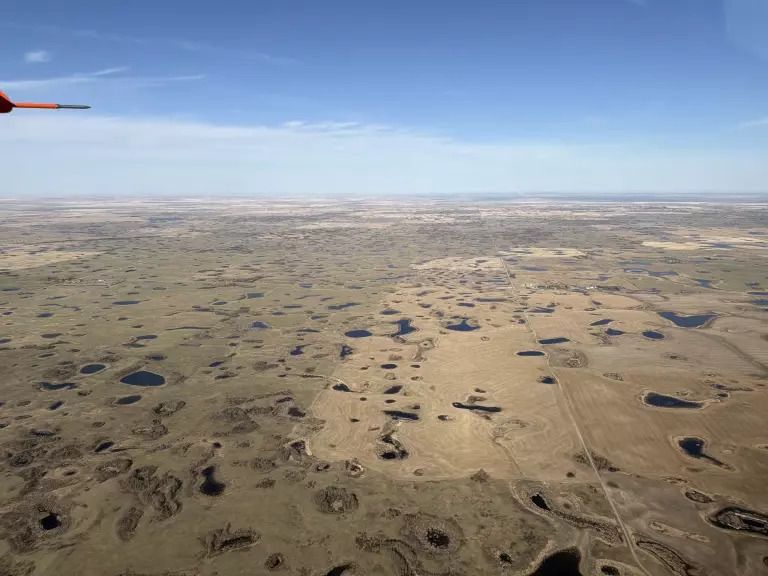
The U.S. Fish and Wildlife Service recently completed its 2026 Waterfowl Breeding and Habitat Survey in the northern part of the U.S. and southern Canada. Field reports from the survey were mixed, with much of the Prairie Pothole Region still under drought conditions; however, some bright spots emerged, particularly in southern Saskatchewan.
According to surveyors in the eastern Dakotas, habitat conditions improved slightly heading north through South Dakota before dropping off west of Huron. Water levels were reduced, including in the northeastern corner of the state, though conditions there were also improved somewhat from 2025.
Drought conditions were less severe in North Dakota, where the Missouri Coteau in the southern part of the state was in good condition and the Drift Prairie in the eastern half of the state was improved over 2025. Wetter farmland conditions did give rise to some populations of redheads, gadwalls and mallards. Pintails and gadwalls were also observed along the North and South Dakota border.
“I would expect nothing more than average to below-average production across the Dakotas in 2026,” surveyor Walter Rhodes wrote in his field report.
The western Dakotas and Montana fared less well following unusually dry and warm conditions in winter and spring, including the eighth driest winter on record and record-breaking high temperatures in the spring, leading to poor wetland habitat through most of Montana, where over 60% of the surveyed area was in moderate to severe drought.
The western part of South Dakota also experienced 30-60% less winter precipitation than average, its fifth driest winter on record. The western parts of both North and South Dakota saw above average temperatures as well, with most natural wetlands dry.
“The only promising areas for duck production were in west-central North Dakota,” surveyor Jeff Drahota wrote. “However, if no significant rainfall occurs soon, initiated and/or hatched nests may have very low fledgling success.”
Waterfowl production is expected to be poor across much of this surveyed area due to scarcity of natural wetlands, according to the western Dakotas and Montana field report. Areas with natural wetlands will need sustained precipitation to produce ducks this year.
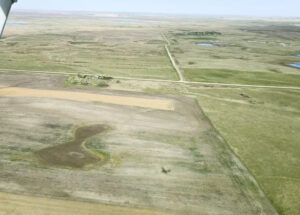
Surveyed areas in southern Manitoba and southeastern Saskatchewan, on the other hand, did see slightly improved conditions compared to 2025. Ice persisted in northern parts of the survey area into early June, and many areas were no longer in drought, though long-term moisture deficits were still evident.
Surveyors reported seeing species staging in southern prairies awaiting ice break-up and fair to good conditions in central Manitoba.
“However, many larger waterbodies were still showing a significant draw down and the region remains quite dry and recovering from the recent drought,” surveyor Sarah F. Yates wrote in her field report.
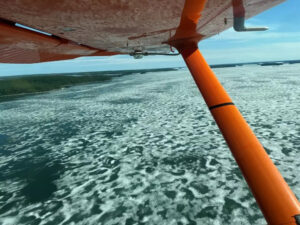
Southern Saskatchewan had the most positive report. Surveyors observed pintails, mallards and other prairie nesting duck species throughout the region. The area saw above-normal precipitation in mid-May, but the consequences were unclear at the time of the survey; mallards are likely to renest if needed, but pintails and canvasbacks could have suffered losses.
Areas near central Saskatchewan had improved conditions, particularly the Allan Hills and Aspen Parklands regions. Overall, conditions were rated mostly fair.
“We’re hopeful that the long stretch of drought conditions in southern Saskatchewan is ending. With improving habitat across the province, we anticipate more ducks will settle in the province in the coming years,” surveyor Phil Thorpe wrote.
In addition, the southern boreal forest in central Canada saw substantial winter precipitation, breaking dry conditions that previously persisted for years and making for good habitat conditions.